Sand & stone
The granular skeleton.
Grading controls how particles pack.

From the plant to the mix.
From the first trial to production.
SEED Materials develops and establishes conventional concrete production systems across Pakistan. Batching plants, mix formulation, testing, commissioning and the people who operate them, brought together around your project.
Plan your concrete system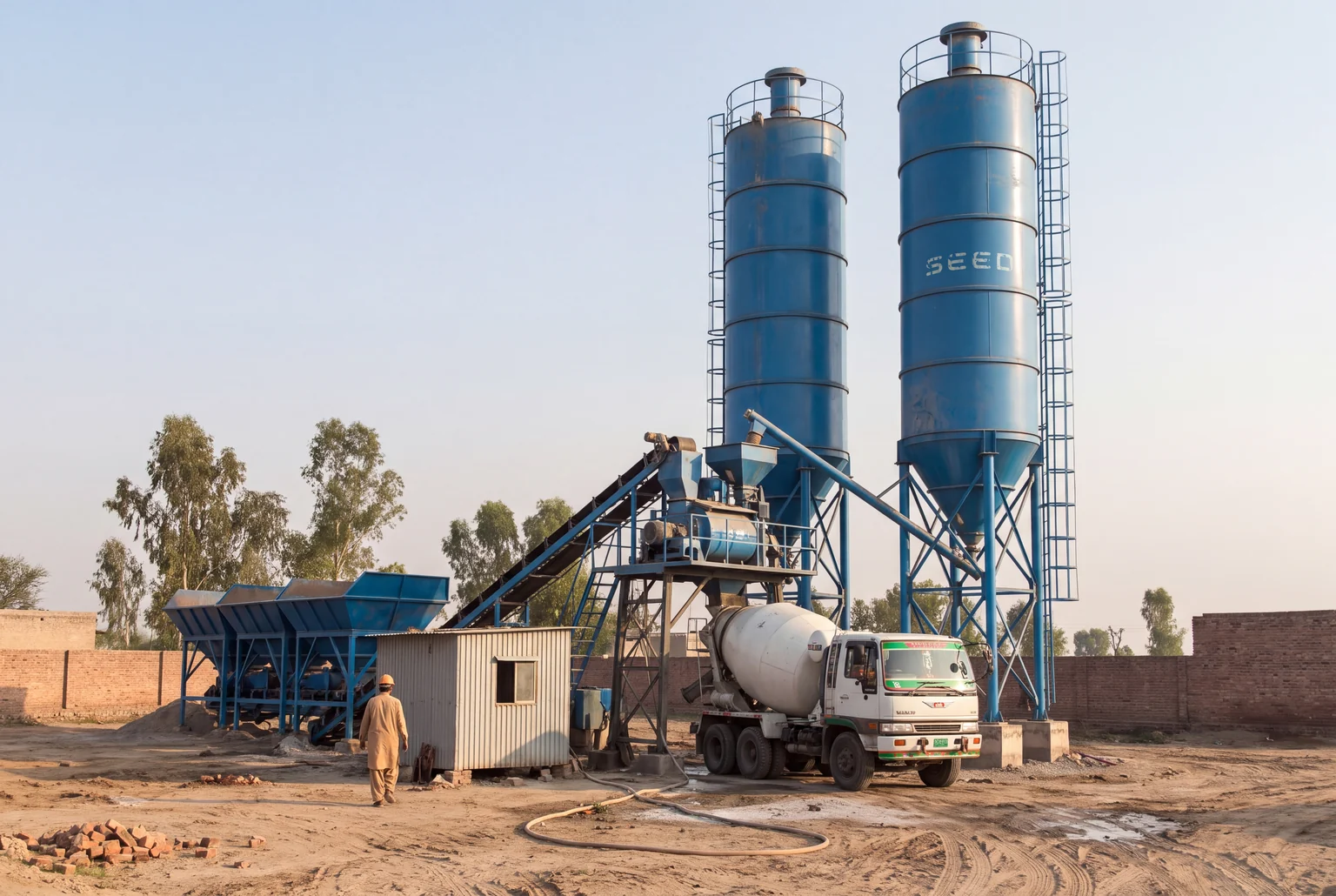
Four ingredient streams become one controlled mix. Follow the material through weighing, mixing, delivery and testing to see what each stage contributes.
The granular skeleton.
Grading controls how particles pack.
Cement reacts with water.
Approved additions can modify performance.
Enables hydration and affects consistency.
The total amount must be controlled.
Adjust workability, setting or other properties.
Use a trial-validated dose.
A controlled batch, from plant to pour.
Select a stage to explore its controls.
Weigh the constituents against the authorised recipe. Correct both aggregate batch masses and the water added at the plant for measured moisture and absorption.
Illustrative quantities for 1 m³ of concrete
Assumes no other water contributions. Absorbed water is excluded from effective water; actual corrections include absorption and all relevant water sources. These figures explain the principle and are not a mix recipe.
The central mixer combines the measured constituents. Loading order, admixture timing, batch size and mixing duration are validated with the selected equipment and materials.
The ratio uses mass, not volume. Its project limit works alongside strength, durability and workability requirements. Increasing water to make concrete flow changes this balance.
Admixtures can change water demand and setting behaviour. Confirm the effect through trials with the actual cement and aggregates.
Discharge the mixed concrete to suitable transport. Coordinate travel, site readiness, pump access, placing rate, compaction and curing so the concrete reaches its intended location in the required condition.
This diagram shows central-mixed concrete. In a dry-batch system, mixing is completed in a suitable truck mixer.
Take representative samples at the specified point. Identify and cure specimens under the required conditions, then test them at the specified ages. Link each result to the batch and review it against the project criteria.
Workability, temperature, and density or air content where specified.
Strength and other specified properties. Keep cube and cylinder test bases distinct.
Slump indicates consistency. It does not establish compressive strength.
Close the loop. Production records and test results inform technical review, further trials and controlled recipe changes.
Functional diagram of a typical central-mixed system. Equipment symbols are schematic; sampling points and acceptance criteria follow the project quality plan.
We develop equipment packages for dedicated project sites, ready-mix operations and precast production, from compact installations to larger systems with multiple production lines.
Required concrete volume and peak placing rate set the brief. Mixer cycle, actual batch yield, truck turnaround, material replenishment and maintenance determine what the system can sustain.
A central-mixed system mixes concrete in the plant before discharge. A dry-batch arrangement weighs and delivers the ingredients to a suitable truck mixer, where mixing is completed. We select the arrangement against the application, fleet, consistency requirements and operating conditions. The flow above illustrates central mixing.
A nameplate rating is only one input. Use the production brief to compare complete, workable packages.
Separate equipment supply from foundations, utilities, transport, erection, controls integration, commissioning and training. Identify the laboratory and concrete transport or placing equipment included in the scope.
Ask for the output basis, operating assumptions, equipment schedule, acceptance checks and handover records. Prices depend on the configuration and responsibilities; a mixer-only figure is not the price of an operating concrete system.
Share equipment details, control-system information, calibration records and the production problem. The scope can then focus on the relevant batching, handling, mix or operational improvements.
Discuss a batching plant requirementCompare mixing, truck delivery and placing to find what limits your pour.
Theoretical mixer capacity 40.0 m³/h
A steady-state planning example, not guaranteed output.
Strength, workability, durability and production economics have to work together.
We develop formulations using the proposed cement, aggregates, water and admixtures. The brief defines strength class and test basis, exposure, placing method, required workability and retention, and any limits on water-to-cementitious ratio or constituents.
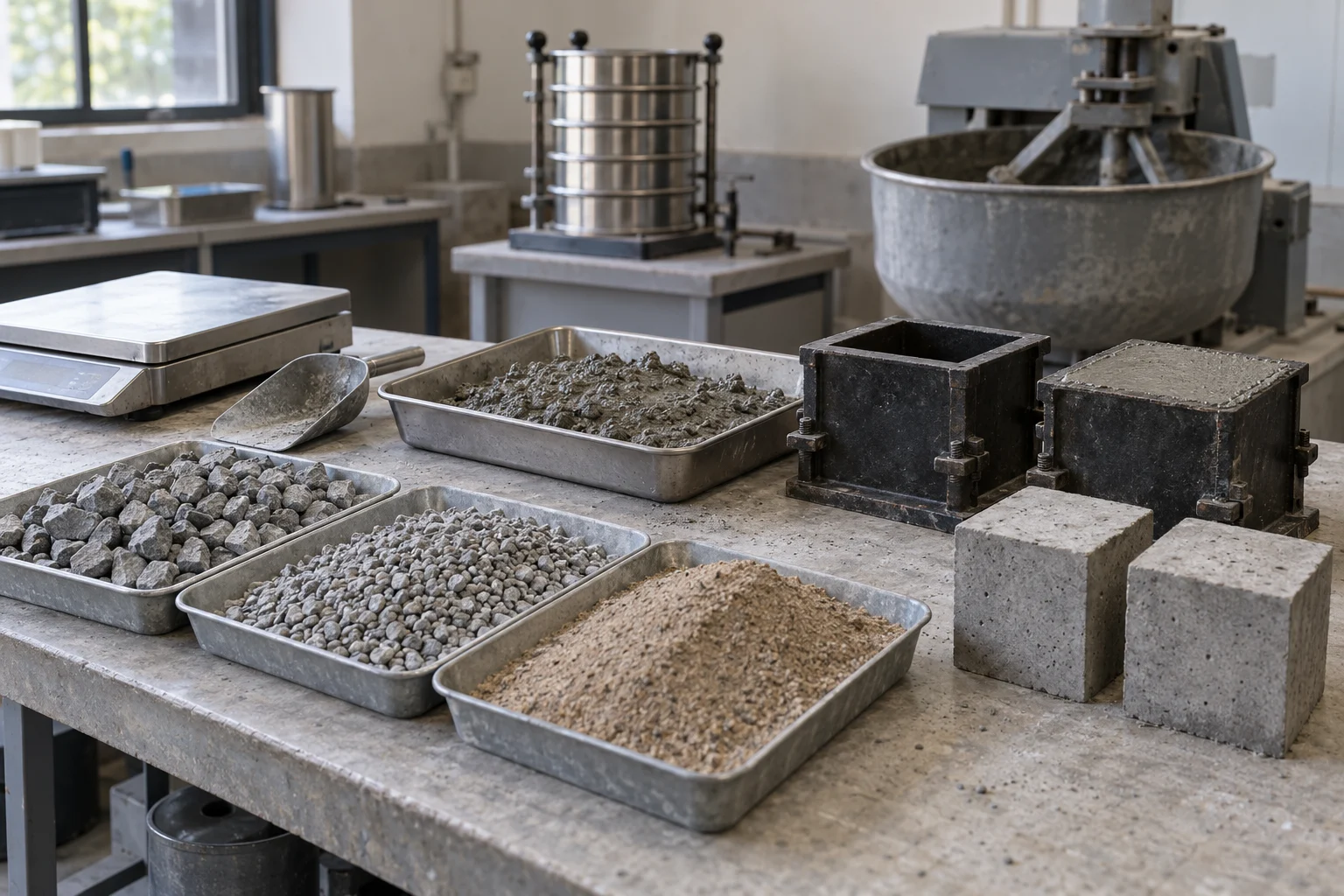
Review source consistency, aggregate grading, absorption and moisture. Check cement and supplementary material data, water suitability and admixture compatibility.
Develop proportions and compare trial batches. Assess fresh properties, finishing behaviour and the required hardened-concrete performance.
Transfer the selected formulation to the proposed plant. Confirm mixing sequence, actual yield, workability retention and the planned transport and placing route.
Document the authorised mix, material sources, operating limits and test plan. Changes in source or constituents trigger a technical review and further trials where needed.
A test result is useful when it can be traced to the materials, mix revision, batch and placing location. We build that connection into the operating system.
Material approvals and storage checks. Scale and dispenser calibration. Aggregate moisture checks and correction of both aggregate quantities and added water.
Specified checks for workability, temperature, density and air content where applicable. Representative sampling, identified specimens and controlled initial curing.
Strength testing at the specified ages, review against acceptance criteria and documented corrective action. Cube and cylinder results use their respective test basis.
Agree the sampling method, specimen type, test ages, curing conditions and acceptance rules in the project quality plan. Water additions must stay within the authorised mix limits and be recorded.
A city development and a remote project need different operating plans.
We can develop and establish the complete system anywhere in Pakistan, with equipment selection, mobilisation and support scoped to the location and production requirement.
Plan for concrete temperature, workability loss, evaporation, placing windows and curing. Cooling measures, admixture selection, trial retention checks and protection of test specimens are coordinated with the project team.
Check delivery routes, crane access, foundation design, electrical load and backup needs. Size water storage and aggregate stock areas against replenishment and operating hours.
Include silo filtration, contained washout, settlement or recovery arrangements, drainage, traffic separation and safe maintenance access. Define environmental permissions and operating responsibilities within the project scope.
One coordinated scope, with clear deliverables at each stage. New installations, upgrades and production improvements can be developed around the equipment you already have.
| Workstream | Deliverables developed for the project |
|---|---|
| Plant & integration | Equipment schedule, site layout, foundation and utility interfaces, installation and commissioning plan. |
| Mix development | Constituent review, proposed formulations, trial records, validation results and controlled mix register. |
| Quality system | Inspection and test plan, sampling arrangements, calibration schedule, batch records and reporting formats. |
| Operational readiness | Operator training, start-up checks, maintenance guidance, spares planning and agreed technical support. |
Supply, civil works, laboratory services, transport and placing equipment, approvals and ongoing operation are defined in the agreed project scope. Plant output and concrete performance are confirmed against the selected configuration and project requirements.
Yes. Share the source and available test information. The development process assesses the materials and confirms suitability through the agreed trials and testing programme.
Yes. Begin with the equipment details, controls, calibration records and production issues. We can develop a scope covering batching accuracy, mix optimisation, material handling, testing and operator practices.
The system is sized to the required daily volume and peak pour rate, then checked against site and logistics constraints. Compact, stationary, relocatable and larger multi-line arrangements can be evaluated. The proposal confirms the selected equipment and achievable production basis.
Yes. The service can cover plant selection and integration, mix formulation, trials, testing arrangements, installation, commissioning, quality controls and training as one coordinated package.
Start with the location, application, expected volume and timing. A full specification can follow.
Learn with SEED Materials
Practical explanations, worked examples and diagrams for the decisions that matter on site.
Explore all ten guides ↗Work from demand and logistics to mixer capacity, storage, utilities and commissioning. Includes an illustrative production bottleneck calculation.
Read the guideTurn a performance brief into a controlled trial programme, with traceable materials, measured results and a clear release decision.
Read the guideFollow one sand fraction from oven-dry mass to SSD design mass and wet batch mass, then correct the water addition.
Read the guide